
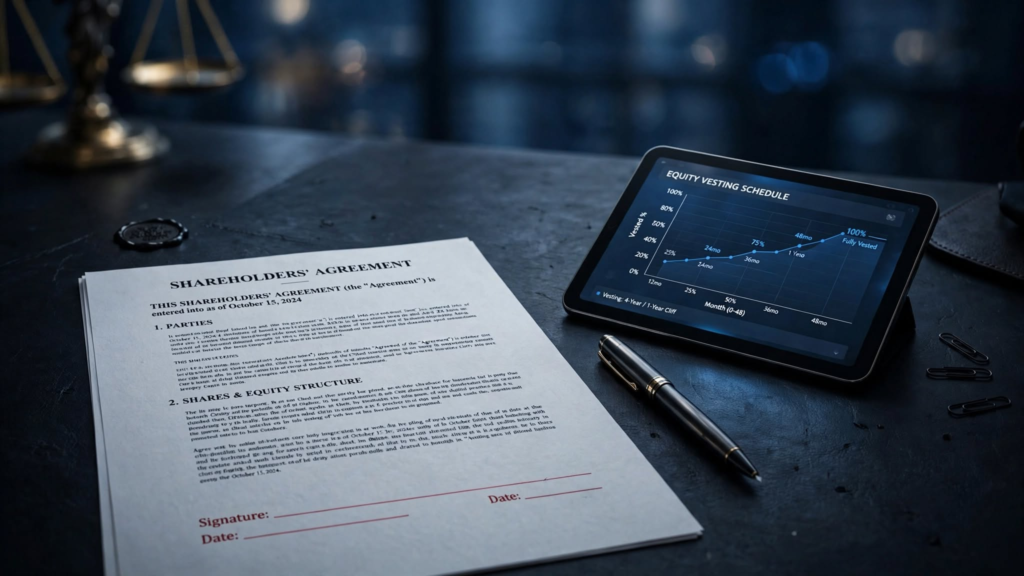
The bad leaver clause is the single most consequential provision in most Indian VC term sheets and shareholders’ agreements, and founders routinely sign it without reading the definition of “cause” twice. Lawyers call the harshest version the “nuclear option”: if you are removed for cause, you lose not just your unvested shares but your vested ones too, usually at face value. A 2026 study by Boolean Legal, covering 108 Indian private companies that raised VC funding in 2025, reported that 76% imposed this outcome, and only 2.8% let a founder keep vested shares after a for-cause termination. In this guide, I’ll explain how the bad leaver clause works in India, what “cause” can quietly include, what happened in the BharatPe dispute, and which carve-outs are worth negotiating before you sign. If you’re still at the co-founder stage, start with our guide to founder agreement clauses in India.
What Is a Bad Leaver Clause (and Why Is It Called the Nuclear Option)?
A leaver clause decides what happens to a founder’s equity when they exit. It sorts departures into two buckets:
| Good Leaver | Bad Leaver | |
|---|---|---|
| Typical triggers | Death, illness, disability, termination without cause, mutual agreement | Termination for cause, fraud, gross misconduct, material breach, sometimes resignation or joining a competitor |
| Unvested shares | Usually repurchased at nominal value | Forfeited or repurchased at nominal value |
| Vested shares | Retained, or bought at fair market value | Bought back at face value or the lower of face value and FMV |
Standard Indian drafting lets the company repurchase a bad leaver’s shares at the lower of face value or fair market value. That is what makes it a “nuclear” option. Vesting normally protects you: shares you have already earned are yours. A bad leaver clause overrides that protection, so years of vested equity can be taken for a token amount. corporatecounsel
What the 2026 Data Says About Founder Share Forfeiture
The Boolean Legal figures show how far market practice has moved. Roughly three-quarters of recent VC deals include full forfeiture of vested and unvested founder shares on a for-cause exit. The old “founder keeps what they’ve earned” convention has become rare.
Why the shift? Commentators argue that Indian investors seek broader contractual protection because India lacks Delaware-style fiduciary case law and predictable exit markets, and because compliance failures can create real liability for investors. Governance collapses at companies such as Byju’s, where the auditor and three investor-nominated board members abruptly quit, hardened investor attitudes further. Investors now price in the risk of a founder going rogue, and the bad leaver clause is the tool they use. lawTechCrunch
What Does “Cause” Actually Mean in a VC Contract?
Everything turns on this definition. Compare a fair definition with an aggressive one:
| Fair (founder-friendly) | Aggressive (investor-friendly) |
|---|---|
| Final conviction or court finding of fraud, embezzlement or a serious offence | Any allegation or reasonable belief of misconduct by the board |
| Material breach that remains uncured 30 days after written notice | Any breach, with no cure period |
| Determined by an independent process or arbitral finding | Determined by the board alone, sometimes by investor nominees |
| Narrow, listed events | Open-ended language like “conduct detrimental to the company” |
Treelife notes that bad leaver definitions are often subjective and lean heavily toward investors, and advises founders to insist on objective criteria such as criminal fraud rather than mere accusations. Hunters Law similarly recommends that cause be defined narrowly and backed by procedural safeguards such as extra approvals and a chance to remedy the breach. treelifehunterslaw
Watch three drafting traps:
- Board-determined cause. If investor nominees control the board, the investor effectively decides whether the nuclear option fires.
- Resignation as a trigger. The UK’s BVCA model documents dropped resignation as an automatic bad leaver event, though investors still push for it during vesting. Indian term sheets often keep it. twobirds
- Cross-triggers. A non-compete or confidentiality breach can quietly convert a good leaver into a bad leaver.
How Forfeiture Actually Works Under Indian Law
Here is a point most guides skip. In company-law terms, “forfeiture” traditionally refers to shares taken from a member for non-payment of calls, and directors must exercise that power in good faith and by proper resolution. A founder’s shares are usually fully paid, so a bad leaver clause works differently. It is normally a call option or compulsory transfer at a pre-agreed price, written into the shareholders’ agreement and mirrored in the Articles of Association. mondaq
Practical consequences:
- It is not automatic. The company or remaining founders must hold a contractual right to repurchase, and that right has to be actively exercised for the forfeiture to take effect. Procedure matters, and a defective notice can undo the exercise. equitylist
- Who buys matters. A company buyback must satisfy the limits and conditions of the Companies Act, so many agreements route the shares to the other founders, investors or an ESOP trust instead.
- The Articles must match the SHA. Provisions that appear only in the shareholders’ agreement can be harder to enforce against the company itself.
- Enforceability can be tested. A founder can argue that taking substantially vested equity at par operates as a penalty under Section 74 of the Indian Contract Act, or that the “cause” finding was not made fairly. Courts and tribunals look closely at process, so the result is fact-specific rather than guaranteed either way.
- Tax can bite the buyer. Shares acquired for far less than market value can carry income-tax consequences for the recipient. Get tax advice on structure before exercising or agreeing to any clause.
Disputes are usually decided by arbitration under the SHA, so the seat, rules and arbitrator appointment mechanism deserve as much attention as the clause itself.
The BharatPe Dispute: What Actually Happened
BharatPe is the case founders cite most, so it’s worth stating the public record carefully.
- May 2022: After an investigation report commissioned by the board, BharatPe said its board had recommended clawing back co-founder Ashneer Grover’s restricted shares, with reporting suggesting his stake would fall from 8.5% to 7.1%. TechCrunch
- December 2022: BharatPe filed a civil suit in the Delhi High Court seeking up to ₹88.67 crore in damages, alleging fake invoices and sham vendors. Mr. Grover has disputed the allegations. tribuneindia
- September 2024: BharatPe announced a settlement under which part of his shares would be transferred to the Resilient Growth Trust, with both sides agreeing to stop legal proceedings. Wikipedia
The lesson is not who was right. The lesson is that once allegations surface, the equity terms in your SHA become the battlefield, and the outcome can turn on how “cause”, “restricted shares” and buyback mechanics were drafted years earlier. Notice too that the resolution moved shares to a trust, which shows how creatively these transfers get structured.
A Worked Example (Illustrative Numbers)
Suppose a founder holds 1,00,000 fully vested shares with a face value of ₹10. At the last round, investors paid ₹500 per share.
- At market value: 1,00,000 × ₹500 = ₹5 crore
- Bad leaver buyback at face value: 1,00,000 × ₹10 = ₹10 lakh
One board finding of “cause” moves ₹4.9 crore of value away from the founder. That gap is why the definition of cause and the process around it deserve negotiation time. If this is your situation, get the document reviewed before signing rather than after a dispute, and our team can help with term sheet and shareholders’ agreement review.
How to Negotiate Carve-Outs: A Founder’s Checklist
- Protect vested shares. Best case, vested shares are never subject to bad leaver treatment. Fallback: a floor of a meaningful FMV discount (for example, 20–30%) instead of face value.
- Objective cause. Tie it to a final court or arbitral finding, or at least a conviction, not an allegation.
- Cure period. Require written notice and 30 days to fix curable breaches.
- Independent determination. Board vote excluding conflicted nominees, or an independent expert or arbitrator, with the founder heard first.
- Good reason resignation. Sophisticated agreements let a founder who resigns after being demoted or having pay slashed be treated as terminated without cause, keeping vested shares. crowleylawllc
- Sunset the clause. Bad leaver treatment should fall away after a set period or on an IPO.
- Escrow during disputes. Keep voting and economic rights, or hold the shares in escrow, until arbitration ends.
- Delete or narrow cross-triggers. Keep non-compete breaches from automatically creating bad leaver status.
- Acceleration. Ask for acceleration on termination without cause and on change of control.
- Independent valuer. Fair market value should be set by a valuer both sides accept.
These points also connect to how you structure the company in the first place, so review your Startup India (DPIIT) registration position and your founder documents together.
Common Mistakes Founders Make
- Signing the term sheet “as standard” and planning to negotiate the definitive documents later, when leverage has gone
- Treating the vesting schedule and the leaver clause as separate topics
- Ignoring what the Articles say, because the SHA is the document they discussed
- Assuming a “for cause” finding needs a court, when many agreements let the board decide
- Not documenting board process, notices and dates, which decide most disputes
Frequently Asked Questions About the Bad Leaver Clause
1. What is a bad leaver clause?
It is a provision in a shareholders’ agreement or founders’ agreement that defines when a departing founder is a “bad leaver” and what happens to their shares. Bad leavers typically lose unvested shares and may have vested shares bought back at face value.
2. Can a company really take my vested shares in India?
Yes, if you agreed to it. Mechanically it is usually a contractual call option or compulsory transfer, not a Companies Act forfeiture. Whether it holds up in a dispute depends on the drafting, the procedure followed and how a tribunal views the price.
3. What is the difference between a good leaver and a bad leaver?
A good leaver exits for reasons such as illness, death, mutual agreement or termination without cause and usually keeps vested shares or receives fair market value. A bad leaver exits for cause or material breach and can lose vested equity at nominal value.
4. What counts as “cause” in a VC agreement?
It depends entirely on the contract. It commonly includes fraud, gross misconduct, criminal conviction, material breach and sometimes competing with the company. The risk is broad wording such as “conduct detrimental to the company” or a board determination without independent review.
5. Is 76% of Indian startups using this clause really the market standard?
According to the Boolean Legal study of 108 companies that raised VC funding in 2025, 76% imposed forfeiture of both vested and unvested founder shares for cause, and only 2.8% let founders retain vested shares. Treat it as a strong trend, not a law, and remember every clause is negotiable.
6. Can I negotiate the bad leaver clause after the term sheet is signed?
Technically yes, but your leverage drops sharply once the term sheet is signed, because it usually includes exclusivity and a deal timeline. Negotiate the leaver principles at term-sheet stage.
7. Is the clause enforceable if the price is only face value?
It is arguable both ways. Founders can challenge such a buyback as a penalty or as procedurally unfair, and outcomes are fact-specific. Do not assume a court will rescue you from a clause you signed.
8. Who decides whether I was terminated for cause?
Whoever the agreement says. Often it is the board, which can mean investor nominees. Push for an independent determination, a cure period and a right to be heard first.
9. Does resigning make me a bad leaver?
Sometimes. Many Indian agreements treat resignation during the vesting period as bad leaver, or at least as a lesser “voluntary leaver” category. Read the definition carefully and negotiate a good reason exception.
10. What happens to my shares if I’m terminated without cause?
You are normally a good leaver, so you keep vested shares, and unvested shares are usually repurchased at nominal value. Ask for partial or full acceleration on termination without cause.
11. How do disputes over forfeited shares get resolved?
Most shareholders’ agreements require arbitration. The seat, the rules and the number of arbitrators should be checked at drafting stage, because they shape cost, speed and confidentiality.
Conclusion
The bad leaver clause is not a formality. It decides whether years of vested equity survive the worst day of your founder journey. With reported adoption near three-quarters of recent VC deals, you will meet this clause, and the real fight is over the definition of cause, who decides it, and what price applies to vested shares. Negotiate objective triggers, a cure period, independent determination and a fair-value floor before you sign, because after a dispute begins the drafting is all you have.
If you are reviewing a term sheet or shareholders’ agreement right now, it is worth having someone who drafts these documents read the leaver provisions line by line. You can reach out for a founder-focused contract review before the deadline pressure starts.
This article is general information, not legal advice for your specific agreement.